Smoother Diablo IV leveling begins with a character that can repeat its basic combat plan. If your strongest skill is unavailable for much of each fight, changing routes or increasing difficulty may only make the weakness more obvious. First build a reliable loop, then choose activities that let you use it comfortably.
This is a practical progression guide, not a speedrun route or a promise about hours to reach a particular level. Experience systems, unlock requirements and seasonal bonuses change. Use current in-game descriptions for exact rewards and eligibility.
Give the build one clear job
Choose a main damage skill or a clearly related combination. Then ask what supports it. That support might involve resource generation, cooldown management, an enabling effect or a particular combat condition. Read the skill descriptions as a connected system rather than selecting every attractive damage option independently.
A useful early build can be described in one sentence: create the condition the main skill needs, use the skill, and recover safely enough to repeat it. If the explanation requires an item you do not own, your current character needs a temporary plan rather than blind imitation of the finished version.
Diagnose why the loop stops
When a fight becomes awkward, identify the interruption before spending more points. Different problems call for different responses:
- Resource interruption: you want to attack but cannot pay the skill’s cost.
- Positioning interruption: enemies or mechanics prevent the attack from connecting effectively.
- Defensive interruption: you spend most of the fight escaping or recovering.
- Timing interruption: the skill is available, but its useful supporting condition is not.
These are not interchangeable. Adding another resource-consuming attack rarely solves an existing resource problem. Likewise, a small damage increase may not help if you cannot remain in a safe position long enough to use it.
Keep a defensive response in the plan
Leveling is less consistent when every mistake forces a lengthy recovery. Know which action protects you from pressure and which action lets you reposition. Read whether an ability grants protection, control relief, movement or another specific benefit; do not assume all defensive-looking skills solve the same problem.
Practice using your response before you are almost defeated. Learn which enemy signals require immediate movement, and leave space to see important ground effects. A comfortable build includes the ability to recover after a poor position, not just a strong opening attack.
Evaluate equipment against the current skill loop
A weapon or affix matters because of what it changes in your actual encounters. A stat supporting an unused skill is not automatically useful just because its number is large. Equally, replacing a special effect can disrupt a working setup even if another displayed item value increases.
Keep comparisons short and specific. Ask whether the new item improves repeated attacks, removes a defensive weakness or enables an interaction you can use now. The equipment priorities guide provides a repeatable comparison order.
Do not spend heavily on each temporary piece. If a small improvement solves a real bottleneck, it may be worthwhile. If the piece is likely to be replaced soon and your character already works, preserving materials can be the better decision.
Choose activities with manageable interruption
The best activity for your session is not always the one with the highest advertised reward. Travel, deaths, sorting and time spent waiting for a group also affect progress. Choose an available objective that matches your campaign state, account access and preferred pace.
If you want to measure efficiency, compare complete runs rather than one lucky encounter. Include the time between attempts and the effort needed to sort rewards. Keep the difficulty and build reasonably consistent during the comparison so the result tells you something useful.
For a first playthrough, story progress is a legitimate goal. You do not need to turn every session into an experience optimization exercise. If you want a more demanding challenge, use the difficulty-readiness checklist before moving upward.
Review progress at useful checkpoints
Review after obtaining an important skill, encountering a repeated problem or finding equipment that changes your loop. You do not need to rebuild the character after every minor drop. Write down one issue, make one relevant change, then test it in familiar content.
For example, if your main attack repeatedly stalls, first identify its support requirement. Make a modest skill or equipment adjustment that addresses that requirement. Then check whether ordinary fights flow more smoothly before adding another variable.
A simple leveling checklist
- Name the skill or interaction doing most of your work.
- Identify how you support its resource or timing needs.
- Keep a reliable defensive and movement response.
- Equip improvements that support the current plan.
- Choose an available activity you can complete consistently.
- Review one bottleneck at a time.
Leveling questions
Should I copy an endgame build while leveling?
Use it as a destination, not an assumption. Check whether it explains temporary skills and missing equipment. A build that depends on unavailable pieces needs an earlier-stage alternative.
Does higher difficulty always mean faster leveling?
No. More time per encounter and additional failures can outweigh improved rewards. Compare your real completion experience, and read the current difficulty panel instead of relying on an old reward table.
Continue reading
- Diablo IV Gear Guide: Compare Affixes Before You Upgrade
- Diablo IV Difficulty Guide: Know When to Move Up
- Diablo IV Beginner Guide: Plan Your First Session
Browse the complete Diablo IV Guides collection.
Sources and editorial notes
For game access, current features and version-specific changes, consult the official Diablo IV website and official Diablo IV patch notes. This article provides general progression advice, not a current-season build ranking or a guarantee of rewards. Live in-game requirements and tooltips take precedence over older guides.
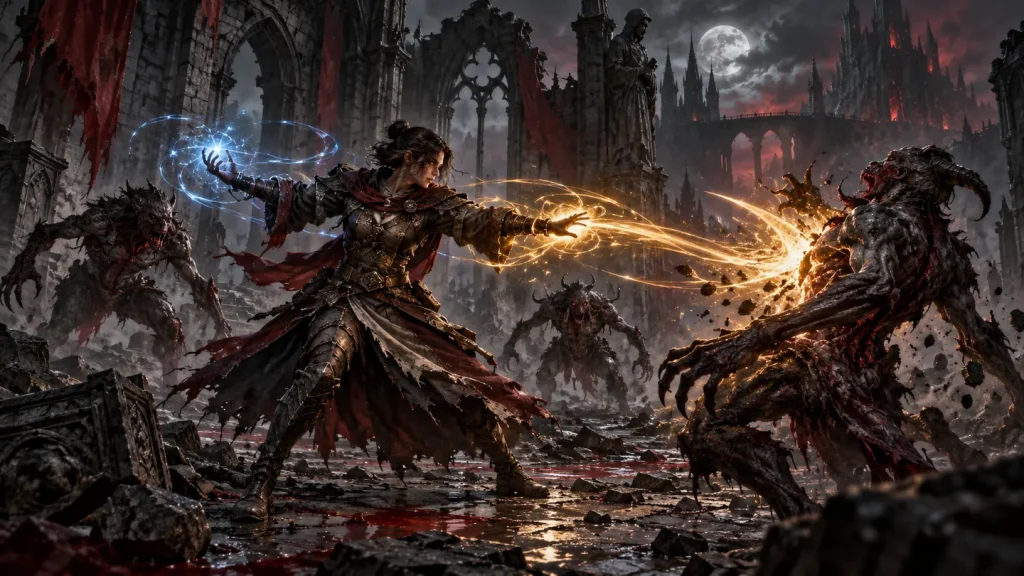
Cover image: AI-generated original editorial illustration, not an official gameplay screenshot or an exact item depiction.